Material Selection
Foam types and materials
Understanding density, firmness and cell structure to choose a material that protects, lasts and looks the part.
How to judge foam
Density vs Firmness.
Density refers to how much material is in a specific volume (usually kg/m³). Higher density means more material and less air. This directly affects durability, tear resistance and weight.
Firmness is how much the foam resists being compressed. While denser foams are generally firmer, they aren't the same thing. You can have a heavy, soft foam or a light, stiff foam.
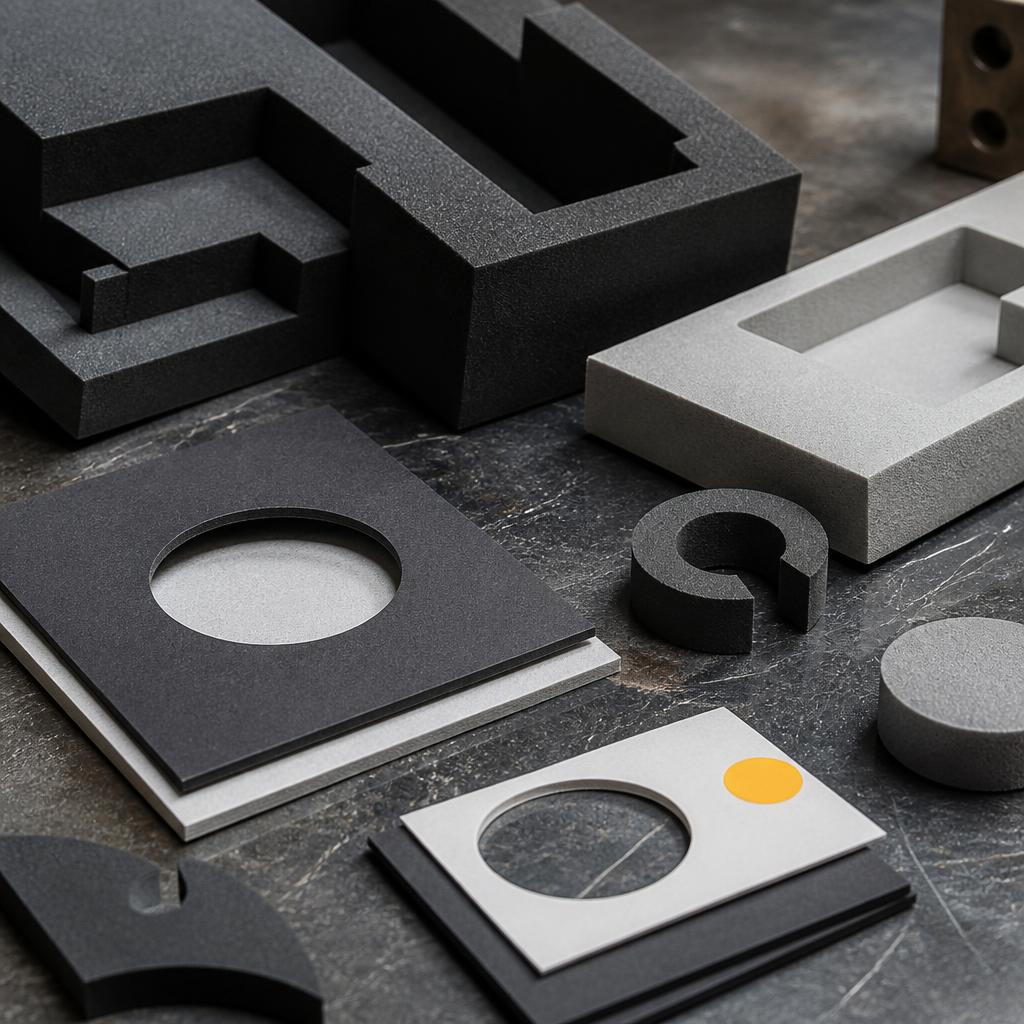
For most protective inserts and cases, we use closed-cell foam (like Plastazote or EVA). The cells are sealed off from each other, meaning the foam doesn't absorb water, resists chemicals, and provides structured support rather than just soft cushioning.
The Workshop Standards
Materials we trust.
Plastazote LD33
The workshop standard for custom inserts. Firm enough to protect, yielding enough to cushion. Closed-cell, water-resistant.
Plastazote LD45 & LD60
Denser variants for heavier tools and industrial components. Extremely hard-wearing and rigid.
EVA Foam
Smooth, consistent finish with high tear resistance. Ideal for presentation cases and regular handling.
Two-Colour Shadow Foam
Contrasting layers (often black over red/yellow) for immediate visual tool control in drawers and cases.
Comparison
Quick reference guide
| Material | Density | Firmness | Best For | Appearance |
|---|---|---|---|---|
| Plastazote LD33 | 33 kg/m³ | Medium-Firm | General tool cases, camera gear | Textured, slightly open surface |
| Plastazote LD45 | 45 kg/m³ | Firm | Heavy tools, industrial parts | Finer texture, rigid feel |
| Plastazote LD60 | 60 kg/m³ | Very Firm | Supporting substantial weight | Dense, hard surface |
| EVA Foam | Varies (usually 30-80 kg/m³) | Medium to Very Firm | Presentation, frequent handling | Smooth, consistent finish |
| Shadow Foam | ~45 kg/m³ | Firm | Tool control, drawer inserts | Contrasting coloured layers |
Expert Advice
Still unsure which foam you need?
You don't need to specify the exact grade. Tell us what you're making and we'll recommend the material that makes the most sense.