Material Profile
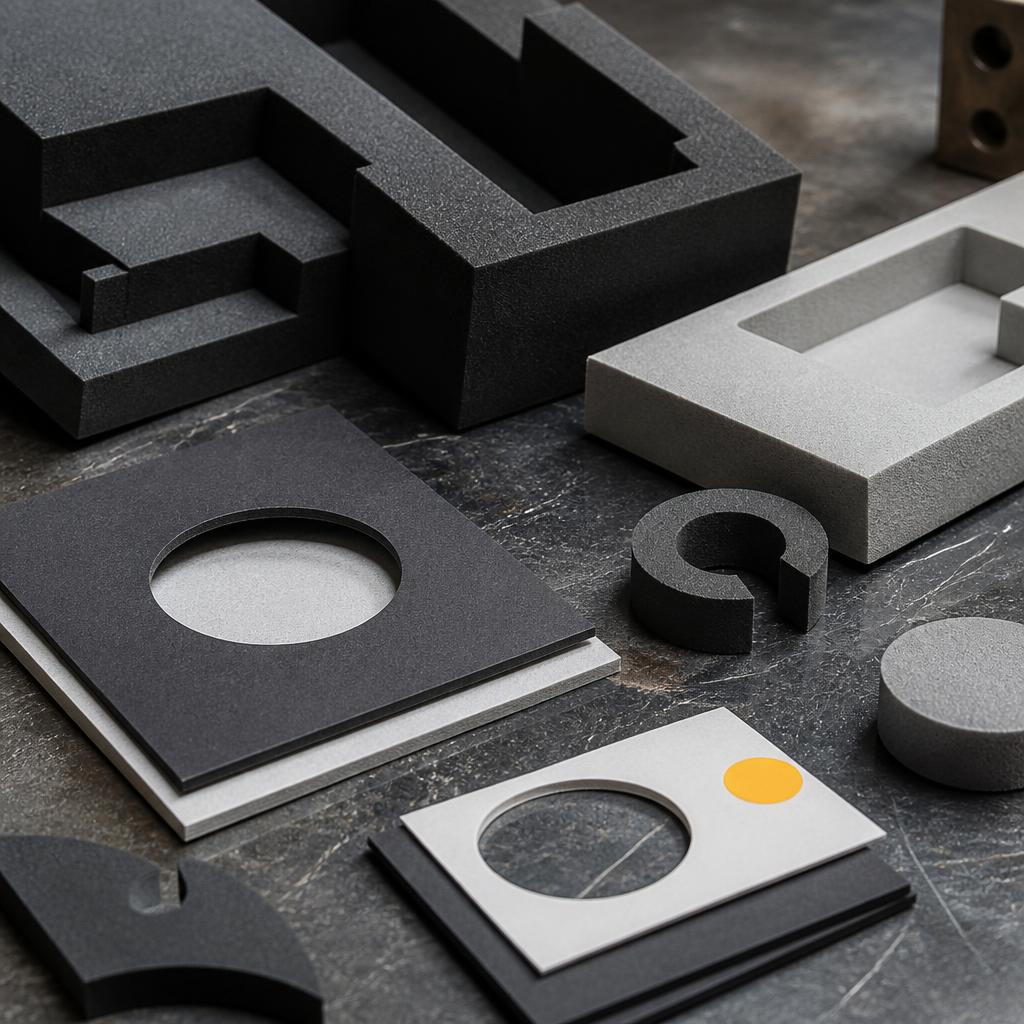
Plastazote. The benchmark.
A closed-cell, cross-linked polyethylene foam. Lightweight, water-resistant, and predictable to machine. If you need a reliable protective insert, it usually starts here.
Why we use it
Consistent performance.
Plastazote is blown with nitrogen, meaning it contains no chemical agents that might corrode or react with the equipment it touches. It cuts cleanly on the CNC, routes predictably, and doesn't hold water.
Key Characteristics
- Closed-cell (non-absorbent)
- Chemically inert
- Excellent impact absorption
- Available in precise densities
- Clean CNC finish
- Tough and long-lasting
Understanding Grades
The LD scale: Increasing firmness.
LD33
Medium-Firm · 33 kg/m³
Our most common recommendation for general case inserts. It yields slightly to grip equipment without crushing. Perfect for cameras, moderate-weight tools and product packaging.
LD45
Firm · 45 kg/m³
A denser step up. Less yielding, more rigid. We use LD45 when the contents are heavy enough to compress LD33, or when the foam needs to hold very fine cut details securely.
LD60
Very Firm · 60 kg/m³
Industrial grade. Starts to feel quite hard to the touch. Reserved for supporting substantial weight or when the application demands structural rigidity over cushioning.
LD70
Extremely Firm · 70 kg/m³
Almost board-like stiffness. Used primarily in heavy industrial contexts, structural packing, and highly specialised applications where minimal deflection is critical.
The "LD" stands for Low Density (relative to solid plastics), and the number is the density in kilograms per cubic metre. As you move from LD33 to LD70, the foam becomes denser, heavier, and significantly firmer. We will always recommend the correct grade for your application.
Ready to proceed?